Temporary and Semi-Permanent Venues Are Becoming a Strategic Tool for Cities and Developers
By Rob Hunden
Temporary and semi-permanent venues are reshaping mixed-use development by accelerating district activation, reducing development risk, and creating flexible entertainment destinations with long-term economic value.
Temporary and semi-permanent venues used to be viewed as a backup plan at best. Today they are becoming a strategic tool for cities, developers, and entertainment operators trying to activate districts faster and generate returns sooner. I recently moderated a panel at the Entertainment Experience Evolution (EEE) conference with leaders from Populous, ES Global, Imagine, and Marquee Development. What became clear during the discussion is that these venues are no longer simply event infrastructure. Increasingly, they are both a new solution for specific venue development and a deliberate part of district strategy. For cities and developers trying to create vibrant mixed-use destinations, semi-permanent venues can accelerate momentum, reduce risk, and create flexibility in an industry where financial performance is uncertain and audience expectations are evolving quickly.
Why Temporary Venues Are Surging Right Now
Several forces are converging to drive interest in these venue formats.
First, the economics of traditional venues are becoming more challenging. Permanent buildings require significant up-front capital and long development timelines. Overall, the cost of a semi-permanent venue can be as little as ten percent of a similar permanent structure, while development timelines can be one-third to one-half the time. This makes temporary venue projects more financially viable.
At the same time, many districts need activity years before the development is complete. Temporary and semi-permanent venues allow districts to activate early. They create foot traffic, support retail and food and beverage tenants, and help establish a destination identity while permanent infrastructure is still being built.
Also, audience behavior is shifting. In an era shaped by streaming and on-demand entertainment, people expect experiences to change and evolve. Attractions that rotate content or offer new experiences over time often perform better than static venues that remain unchanged for decades.
From an environmental perspective, temporary and semi-permanent venues are a real-world use case for “reduce-reuse-recycle.” Typically, 60 to 70 percent of temporary building components can be reused in other structures. For example, movie studio components in the UK have been used to create entertainment venues and vice versa. In the U.S., cricket stadium components on Long Island were reused to create the stands for the Formula 1 race in Las Vegas.
Finally, advances in modular construction and design-build collaboration are making these venues faster and more efficient to deliver than ever before. All of these elements combine to make one ask the obvious question: “Why build permanent when you can build temporary or semi-permanent?”
ROI Means More Than Ticket Sales
One of the most important insights from the EEE panel discussion is that venue ROI should not be measured solely by ticket revenue. In mixed-use districts, the broader economic impact often matters more. Venues drive foot traffic, increase retail sales, attract sponsorships, strengthen brand identity, and accelerate leasing momentum across the district. This is especially important for districts that depend on steady activity rather than occasional major events. Exhibitions, immersive attractions, art installations, and rotating entertainment programming can keep districts active throughout the year. In that sense, the venue itself is often not the primary revenue generator. Instead, it becomes the engine that powers the surrounding real estate.
Speed to Market Changes the Economics
Another major advantage of temporary and semi-permanent venues is speed. Modular design and design-build collaboration allow projects to open months or even years faster than traditional construction. These venues can often be delivered at a fraction of the cost of permanent facilities while still providing high-quality guest experiences. That speed fundamentally changes the economics. Instead of waiting years for a permanent venue to begin generating revenue, a temporary or semi-permanent structure can begin producing income almost immediately. When viewed across the lifecycle of a development, that earlier activation can significantly improve financial performance.
Designing the Venue Around the Experience
Temporary venues also allow developers and operators to design the building around the experience itself. Traditional venues often force productions to adapt to existing infrastructure. Temporary venues allow the opposite approach. The structure can be purpose-built to support a specific show, exhibition, or immersive attraction.
We are seeing this in projects like The Hunger Games: On Stage in London. The production is housed in the Troubadour Canary Wharf Theatre, a purpose-built venue designed specifically for the immersive stage experience. The theater places audiences around a central arena and allows action to unfold throughout the space, creating a far more dynamic environment than a traditional proscenium theater.
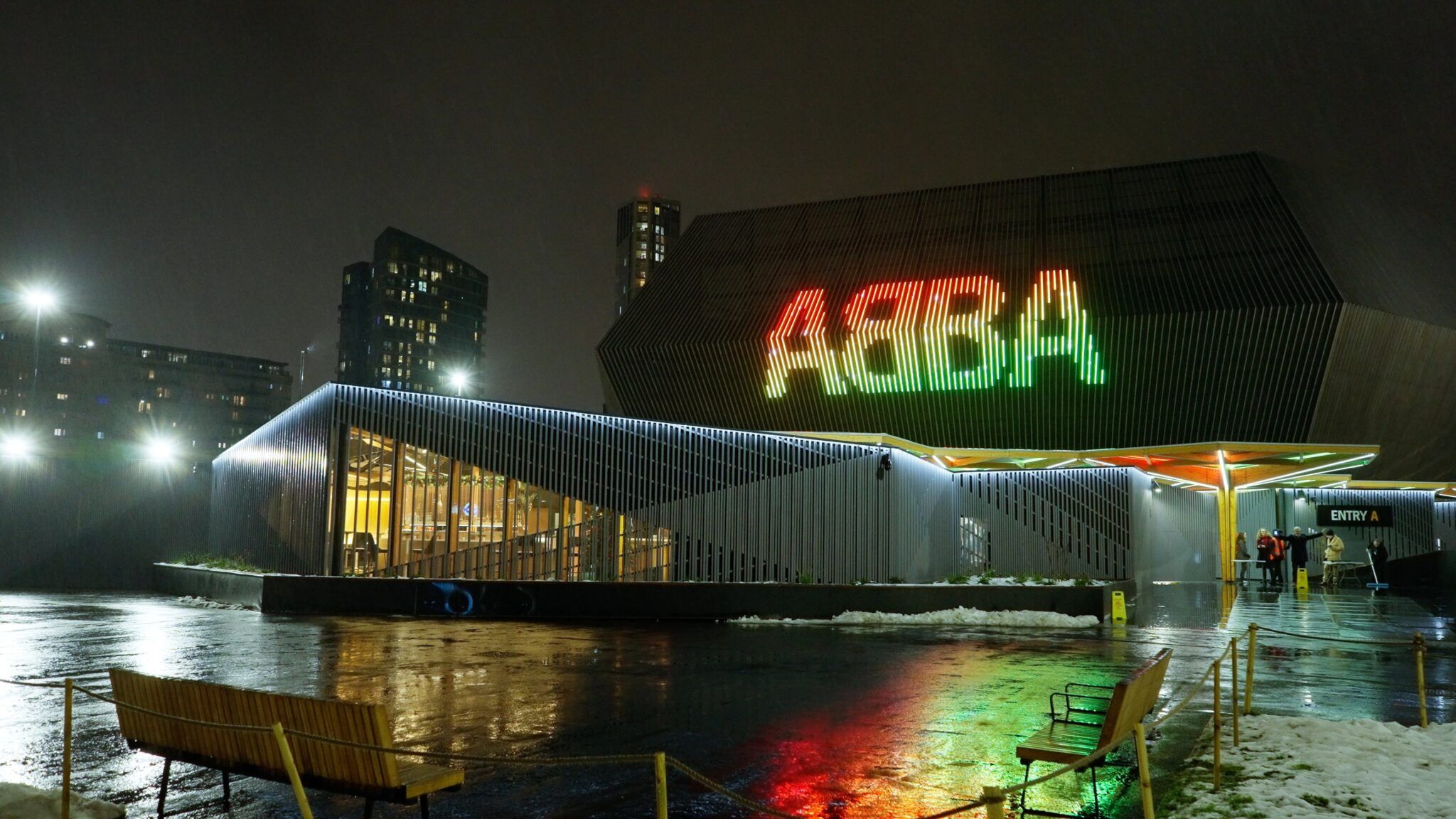
Because the venue was designed around the production, the creative team was able to optimize audience flow, staging, and technical elements from the start. The structure was also designed with reuse in mind, allowing significant portions of the venue to be disassembled and repurposed in the future. Other examples of this concept are the Abba Voyage at the ABBA Arena and Starlight Express at the Starlight Auditorium at Troubadour Wembley Park Theatre, both in London.
Temporary Venues Are Also Transforming Sports
While much of the discussion around temporary venues focuses on entertainment and attractions, sports are also embracing the model. A recent example is the Nassau County International Cricket Stadium built on Long Island in New York for the 2024 ICC Men’s T20 World Cup. The modular stadium seated approximately 34,000 fans and was constructed specifically to host tournament matches before being dismantled after the event. For global sporting events, this model creates enormous flexibility. Organizers can bring major competitions to markets that may not have permanent stadium infrastructure, while avoiding the long-term risk of underutilized facilities once the event concludes. Temporary venues allow sports organizers to match infrastructure to demand rather than building permanent venues that may struggle to find year-round use. Now, much of that venue can be found as stands for F1 race fans in Las Vegas!
Semi-Permanent Venues Can Deliver Long-Term Value
Some temporary venues are also evolving into semi-permanent entertainment anchors. An example is the ABBA Arena in London, the purpose-built venue created for the ABBA Voyage experience. The modular arena was designed to host the immersive concert experience for multiple years, while still allowing the structure to be relocated or repurposed in the future. This hybrid model sits somewhere between a touring attraction and a permanent venue. It allows operators to deliver large-scale productions while maintaining flexibility if audience demand or entertainment formats change. For developers and cities, this flexibility can be extremely valuable.
Temporary Does Not Mean Short-Term Thinking
Perhaps the biggest misconception about temporary venues is that they represent short-term thinking. In reality, the most successful projects treat them as part of a long-term strategy. They help districts test concepts, generate early momentum, and create programming flexibility in an industry that is changing rapidly. In some cases, temporary venues lead directly to permanent investments. In others, they remain flexible platforms that evolve with new experiences and operators. Either way, they provide cities and developers with an important tool for managing both risk and opportunity.
What Cities and Developers Should Do Next
For cities and developers planning new entertainment districts, the rise of temporary and semi-permanent venues offers several important lessons:
Start programming earlier than you think. District momentum often depends on activity long before construction is finished. Temporary venues can accelerate visitation and establish a destination identity early.
Design venues around experiences. When a venue is tailored to a specific attraction or type of programming, it can deliver stronger guest experiences and better economics.
Build flexibility into long-term plans. Entertainment formats, technology, and audience expectations will continue to evolve. Flexible venues allow districts to adapt rather than locking into a single concept for decades.
Temporary and semi-permanent venues are a core strategy for shaping the next generation of destination districts.
As cities and developers consider how temporary and semi-permanent venues can support long-term district strategies, it is crucial to begin with a clear understanding of market demand, programming potential, and financial feasibility. At Hunden Partners, we guide public and private clients and evaluate these opportunities through the full lifecycle of destination real estate development, from concept to feasibility to financing and construction to long-term asset management. Our work across sports, entertainment, and mixed-use districts gives us a deep understanding of the evolving role venues play in shaping successful places.
- Temporary Venues
- Entertainment Districts
- Placemaking and Destinations
- Stadium Development